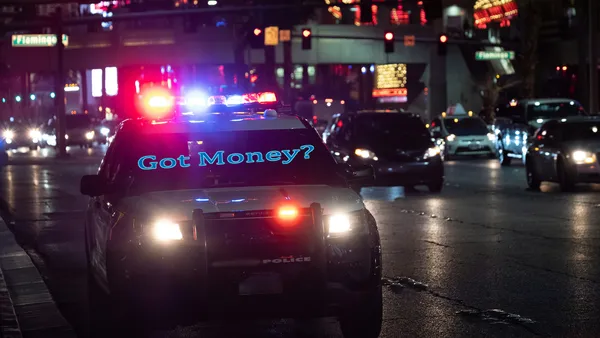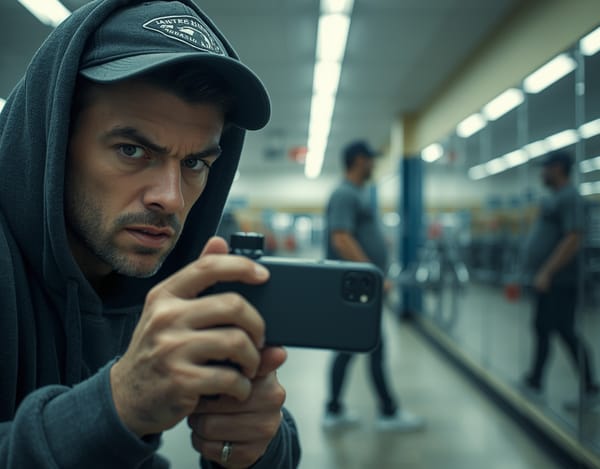
At some point, the Right of Publicity, commonly known as likeness law, stopped protecting people and started protecting systems.
The original idea was simple. A person owns their face, their name, their voice. No one can take someone’s identity, turn it into profit, and walk away clean. That system worked in a world before the internet and the portable film studios we call phones.
That world no longer exists.
Today, attention itself is currency. You only need to point a camera at someone and they become the star of your next video. The rise of social media turned everyday life into content, and modern day paparazzi now rely on the idea that once you step outside your home, you have no expectation of privacy. Even that line is starting to blur.

Until recently, the walls of your home meant someone could not see you or record you. That assumption can no longer be trusted.
Technologies already exist that can detect presence, movement, even breathing through walls using radar and microwave imaging. These tools are marketed for search and rescue and to aid law enforcement, but that distinction is not guaranteed to last. As these technologies spread, the boundary between public and private availability shrinks.
The legal standard of “what can be seen from the street is public” begins to collapse when tools can see through your walls. Even your own wifi can betray you through what is now known as wifi sensing, or digital echolocation.
When identity, behavior, or presence can be captured without awareness, the intent of the law becomes irrelevant. Only the letter of it matters.
Until recently going about your day as a normal citizen didn't lead to being broadcasted to the world. You wouldn't find yourself on the 10 o’clock news just for buying a banana and some olive oil. As that expectation erodes, the gap between privacy law and lived reality keeps widening.
Legally, we still pretend it's the same world that existed before the internet and social media. This is likely due to the ever increasing age of politicians who hear “Bluetooth” and think disco is coming back. The age of the crypt keepers is among us.

U.S. law draws a hard line between commercial use and expressive use. Commercial use means advertising, endorsements, and merchandise. Expressive use means commentary, criticism, parody, news, or art. Consent is required for one, not the other. Monetization does not count as commercial, unfortunately.
A YouTube video can earn thousands of dollars from ads and sponsors and still be treated as protected speech, even when an unconsenting person is the framework of the content. A thumbnail using your face is considered part of that expression, even when its purpose is to pull clicks and revenue.
For public figures, this was always part of the deal. Visibility came with exposure. Private individuals are now pulled into that same space without choosing it.
Auditor videos, prank videos, and mockery content live in this gap. They rarely sell a product outright. They sell attention. Identities become hooks. Faces become thumbnails. Names become titles. Likeness law was never meant to stop criticism. It was meant to stop exploitation.
The problem is that exploitation no longer looks like a billboard or a TV ad. It looks like an influencer feeding a person to an audience because outrage converts better than anything else.
The law needs a tune up.
The current setup is simple. If you are in public, you can be recorded. If someone records you shopping or working out at the gym, they can post that video and profit from it through ads or sponsors, all while you are the backdrop for profit in someone’s day in the life content.
As long as they do not imply you are endorsing a product, there is nothing you can do about it. This is a framework built for newspapers and television, not for a world where strangers can farm your face for clicks with a camera around every corner, ready to capture you scratching your ass.

Commercial use needs to stop meaning only ads and product endorsements. If an individual’s likeness is being used to generate revenue of any kind, outside of a news report, consent should be required.
It 's one thing to use the internet to expose bad actors. It's another thing entirely to incentivize content stalking of average people doing their jobs or living their lives.
The phrase “no expectation of privacy in public” has become a permission slip. You can be seen in public, but that does not mean you consented to broadcasting your face in monetized clips pushed to millions.
Being in a store means the people in that store can see you. It does not mean you volunteered to become content.
Tip the Author
Tips help support the time, tools, and production behind the work. If you’ve found value in the content and want to back the craft, this is the simplest way to do it.